Solar Water Heater Repair & Service in Broward County
Florida Solar Pro provides solar domestic water heating diagnostics, repair, collector service, pumps, controllers, sensors, storage-system evaluation, replacement, and reroof support throughout Broward County.
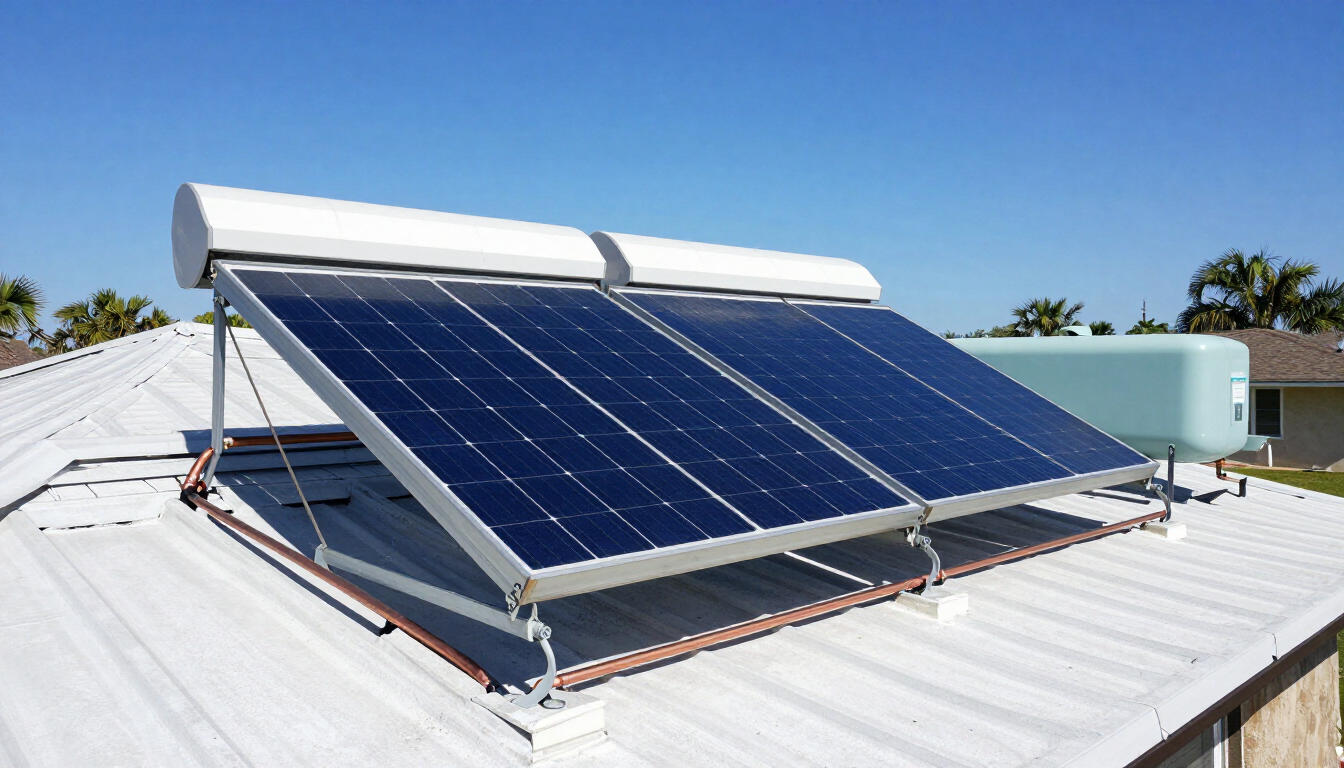
Serving Fort Lauderdale, Pompano Beach, Deerfield Beach, Coconut Creek, Coral Springs, Parkland, Sunrise, Plantation, Davie, Weston, Hollywood, Pembroke Pines, Miramar and surrounding Broward communities.
Call 954-372-3358 (Broward / South Florida Service) · 772-464-2663 (Main Office) · Request Service Estimate
Solar Water Heater Not Making Enough Hot Water?
A solar domestic water-heating system should deliver hot water on sunny days and fall back to backup heating when it cannot. When the water runs cool or the solar side never seems to contribute, the cause is usually in the circulation loop, the controls, or the storage tank — not the collectors alone.
- No Hot Water From the Solar Side — when the solar contribution drops to zero, the cause is usually in the circulation loop — a failed pump, a stuck valve, an air lock, or a controller that never calls for circulation. We trace the loop and confirm whether fluid is actually moving before recommending a repair.
- Controller or Sensor Not Calling for Heat — a solar water-heating controller compares the collector temperature to the tank temperature and runs the pump only when the roof is hotter than the tank. A failed roof sensor, failed tank sensor, or bad controller can keep the pump off all day even in full sun.
- Air Lock or Loss of Circulation — air trapped in the collector loop can stop circulation even when the pump runs. We check for air at the high points, verify the air vent and check valve, and confirm flow before declaring the pump failed.
- Partial Output — Luke-Warm Water — when the system runs but never delivers hot water, the cause can be a weak pump, scale buildup in the collector or heat exchanger, a mixing valve set too low, a failing check valve allowing reverse flow at night, or a tank that has lost its stratification.
Solar Circulation Pump Problems
The circulation pump is the heart of an active solar water-heating system. When the controller decides the roof is hot enough, the pump moves fluid — either potable water in a drainback or direct system, or a glycol solution in a closed-loop system — through the collectors and back to the storage tank. If the pump does not run, or runs but moves no fluid, the collectors never deliver heat to the tank.
Common pump symptoms we see in Broward:
- Pump does not run when the controller calls for circulation
- Pump runs hot but moves no fluid
- Loud grinding, humming, or rattling from the pump body
- Pump runs continuously and never shuts off
- Pump cycles on and off rapidly
- No flow at the collector supply line even with the pump energized
Because an air lock, a stuck valve, or a failed controller can all mimic a dead pump, we confirm flow at the collector supply line before recommending pump replacement. Replacing a pump that was never the problem fixes nothing.
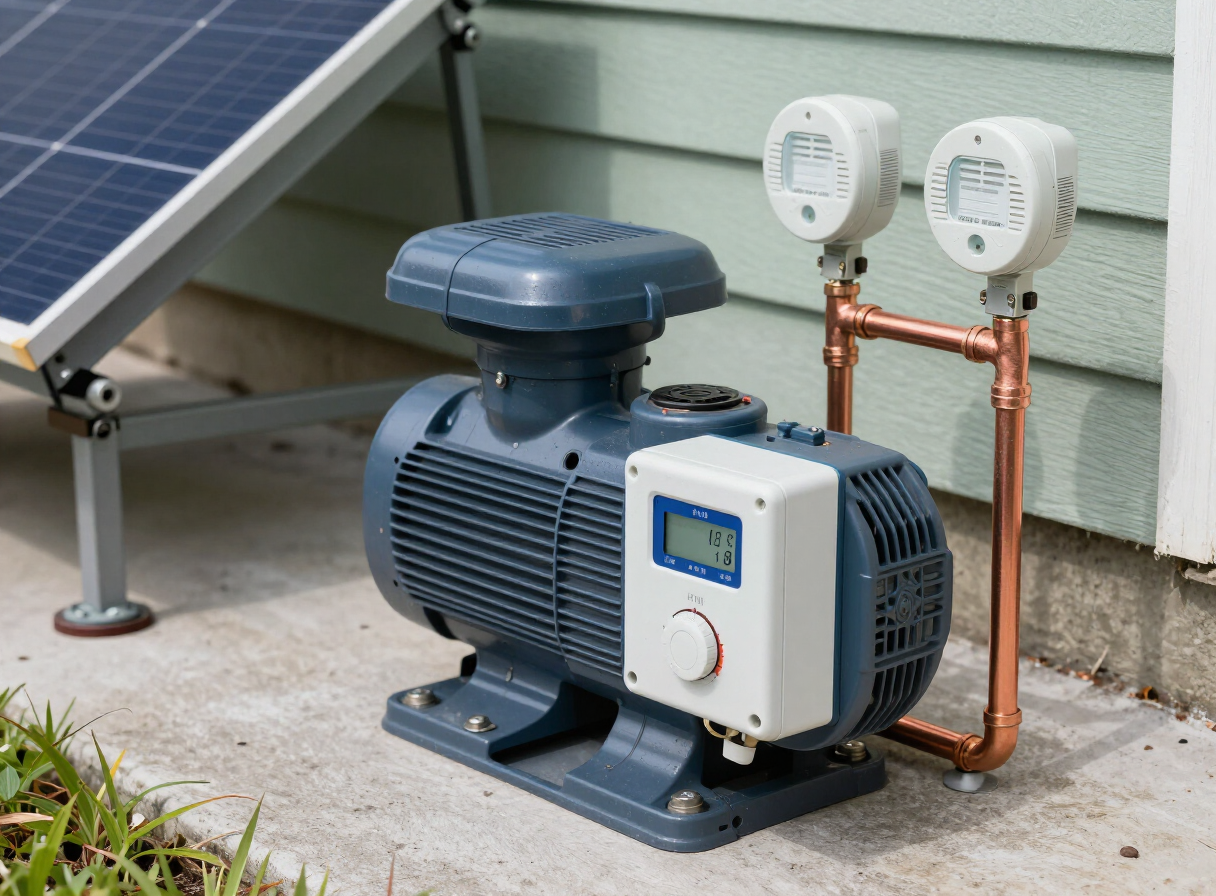
Circulation pump, controller, and sensor wiring are checked together — not in isolation.
Controllers & Sensors
Solar water-heating controls are different from solar pool heating controls. A pool controller watches collector and pool temperature and runs a valve; a domestic hot-water controller watches collector and tank temperature and runs a circulation pump. The logic, the sensors, and the failure modes are not the same, and we treat them as separate systems.
- The controller compares a roof-mounted collector sensor to a tank sensor
- It runs the circulation pump only when the collector is hotter than the tank
- A failed roof sensor can keep the pump off in full sun
- A failed tank sensor can run the pump constantly or never at all
- A bad controller board can ignore sensor input entirely
- Wiring, fuses, and the pump relay are part of the control circuit and are checked together
When the solar side never runs, the controller and both sensors are tested as a circuit. A new controller installed against bad sensors, or new sensors wired to a failed relay, will not restore circulation. We confirm the full control path before recommending any single replacement.
Leaking Solar Hot-Water Collectors
A leaking solar hot-water collector can show up as a drip at the roof, a stain down the wall, a wet patch at the equipment pad, or a slow loss of system pressure in a closed-loop system. Where the leak is located drives the repair decision.
- Connection and header leaks can often be repaired without replacing the collector.
- A single cracked tube or failed joint may be serviceable depending on collector design.
- A badly degraded, split, or corroded collector may need replacement.
We pressurize the loop and isolate the exact source before recommending repair or replacement. We do not promise that every damaged collector can be repaired, and we do not recommend replacing an entire array for a single connection leak.
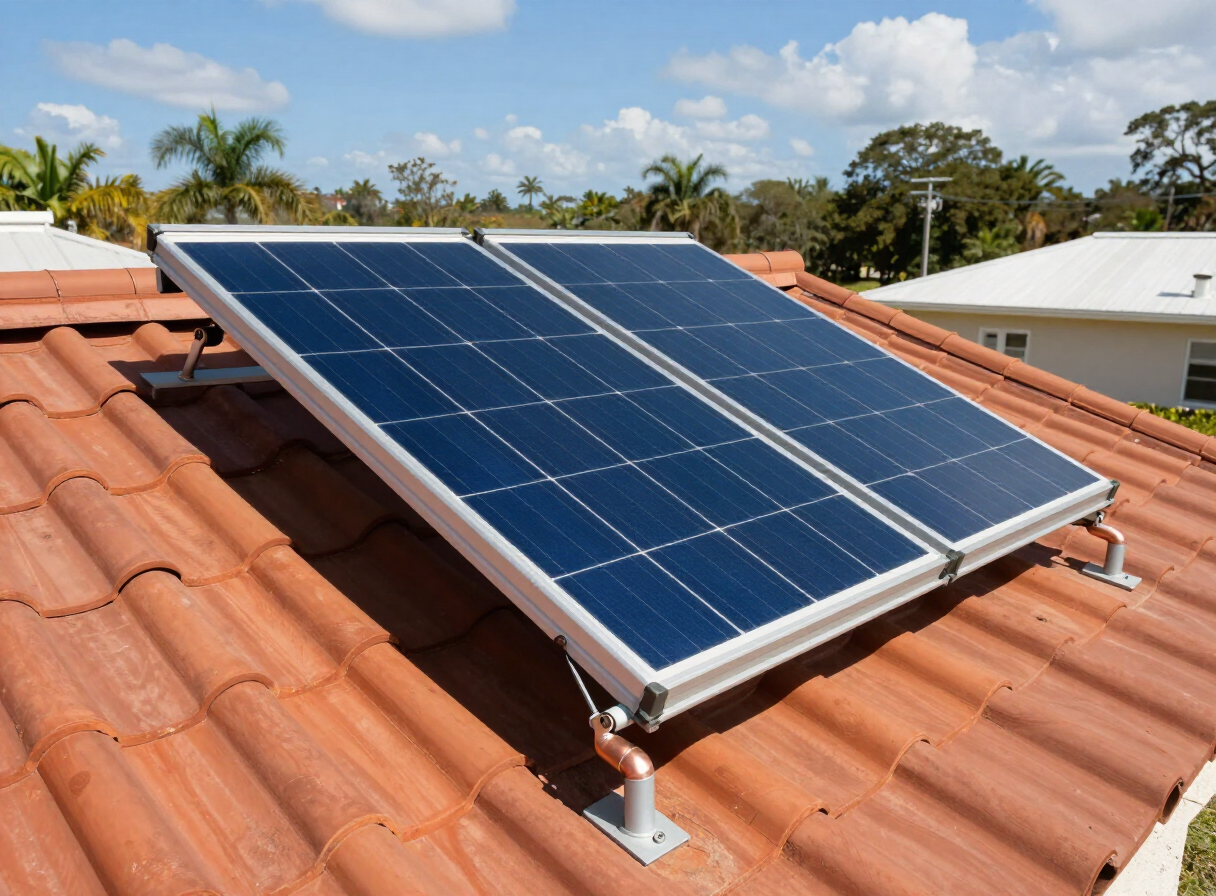
Collectors are inspected under pressure before any repair or replacement decision.
Storage Tank Problems
The storage tank holds the solar-heated water and usually contains the backup heating element. Tank problems reduce usable hot-water volume, hurt temperature retention, and can mask a perfectly good collector loop. We evaluate the tank as part of the whole system — not in isolation.
- Visible external corrosion, weeping, or water staining around the tank jacket
- Loss of pressure or reduced hot-water volume at the fixtures
- A tank that no longer holds temperature overnight may have lost insulation value or have a failed backup element
- Internal scale and sediment reduce usable volume and recovery over time
- A leaking tank is generally not repairable and is evaluated for replacement
We do not promise that a leaking tank can be repaired. A leaking storage tank is generally evaluated for replacement, and the collectors, pump, and controls are checked at the same time so the new tank is not installed against a failing loop.
Solar Water Heating Plumbing
The plumbing between the collectors and the tank is what makes a solar water-heating system actually move heat. Valves, check valves, air vents, and piping all have to work together. A single failed check valve can let the system reverse-flow at night and cool the tank instead of heating it.
- Solar loop isolation valves for service and shutdown
- Check valves that prevent reverse thermosiphoning at night
- Air vents and vacuum relief at the high points of the loop
- Mixing valves that temper delivered water to a safe temperature
- Copper, PEX, or stainless supply and return piping and their insulation
- Drainback or pressurized glycol loop configurations, depending on system type
We do not provide DIY reconfiguration instructions. Solar loop plumbing operates at temperature and pressure and should be serviced by a licensed contractor.
Backup Heating
Most solar water-heating systems do not rely on the sun alone. They incorporate backup heating so the home still has hot water on cloudy days and overnight. The backup component is part of the complete system, and a problem with delivered hot water is not always a solar problem.
Common backup configurations we evaluate:
- Electric resistance elements inside the storage tank
- A separate gas or electric tankless unit tied to the solar storage
- A conventional tank water heater plumbed as a second-stage heater
- A heat-pump water heater used as backup or hybrid storage
- Tempering and mixing valves that affect delivered temperature
When a homeowner reports “no hot water,” the complete system — solar loop, storage tank, and backup — should be evaluated together. A failed backup element can look exactly like a failed solar loop, and vice versa. We diagnose both before recommending a repair.
Repair or Replace?
We do not apply an arbitrary age cutoff. A well-maintained system with one failed component may need a targeted repair, while a system with several failing parts may be more economical to replace. The decision comes from the condition we find — not from a calendar.
What we evaluate together:
- Collector condition — glazing, absorber coating, tubes, headers, and connections
- Circulation pump age and performance under load
- Controller and sensor function and compatibility with current components
- Storage tank integrity, capacity, and backup element condition
- Valves, check valves, air vents, and the condition of loop piping and insulation
- Fluid condition in closed-loop glycol systems
- How many components are failing at once versus a single isolated problem
When only one component has failed, a targeted repair usually makes sense. When collectors, tank, pump, and controls are all reaching end of life together, a full system replacement is often the more economical path. We lay out both options honestly and let the homeowner decide.
New Solar Water Heating Systems
A properly designed solar domestic water-heating system starts with the household’s hot-water demand, the available roof, and a realistic backup strategy. Our design process:
- Evaluate household hot-water demand
- Inspect available roof area, orientation, and shading
- Size the collector array to the load
- Select storage tank capacity and backup strategy
- Plan circulation, valves, sensors, and controls
- Coordinate plumbing and any required electrical work
- Install the system
- Test circulation, sensor logic, and delivered temperature
- Explain operation and shutdown to the homeowner
We do not claim every home is a good candidate without an evaluation. Roof orientation, shading, household demand, and existing water-heating infrastructure all affect whether a new solar water-heating system makes sense for your Broward home.
Reroof Removal & Reinstallation
When your Broward home needs a new roof, Florida Solar Pro can remove existing rooftop solar hot-water collectors and associated plumbing for the roofing work and reinstall suitable components afterward.
- Existing collectors and rooftop plumbing are inspected before removal
- Collector and component condition is documented
- Collectors are removed so the roofer can work safely
- Failed or damaged components may require separately authorized replacement
- Reinstallation depends on the condition and compatibility of the existing equipment
- Circulation, sensors, and controls are tested after reinstall
We do not guarantee every old collector can be reused. Existing components are inspected after removal, and failed or unsuitable equipment may require separately authorized replacement.
See our full solar removal and reinstallation service for details.
Original Installer Gone?
Many Broward homes have solar water-heating systems that were installed by companies that have since closed, left the market, or are otherwise unavailable. Florida Solar Pro can inspect, diagnose, and service existing solar water-heating systems even when the original contractor can no longer be reached.
Florida Solar Pro does not automatically assume or inherit another contractor’s workmanship or installation warranty. We evaluate your system as it exists today and provide honest repair and service options.
Schedule Existing System Inspection
Broward County Solar Water Heating Service Area
Florida Solar Pro provides solar domestic water-heating repair and service across Broward County, from Deerfield Beach in the north to Miramar in the south.
- North Broward: Deerfield Beach, Coconut Creek, Pompano Beach, Parkland, Coral Springs, Margate
- Central Broward: Fort Lauderdale, Oakland Park, Sunrise, Plantation, Davie, Cooper City, Tamarac, Lauderhill
- Western Broward: Weston
- South Broward: Hollywood, Pembroke Pines, Miramar
Looking for solar pool heating service or PV solar repair in Broward? See our Broward County solar pool heating page and our Broward County solar repair and Solar Rescue page.
Other Solar Services in Broward County
Florida Solar Pro is a full-service solar contractor across Broward County. Beyond solar water heating, we provide PV solar repair and inverter diagnostics, Solar Rescue for systems whose original installer has closed, battery backup and storage upgrades, and solar panel removal and reinstallation for reroofing projects. PV solar repair & Solar Rescue · battery backup & storage · solar removal & reinstallation · Solar Rescue.
South Florida Service for Broward County
Broward / South Florida Service: 954-372-3358
Main Office: 772-464-2663
Email: info@flasolarpro.com
Broward County Solar Water Heater FAQ
Why is my solar water heater not producing hot water?
The most common causes are a circulation pump that is not running, a controller or sensor that never calls for circulation, an air lock in the collector loop, a stuck valve, or a problem with the storage tank or backup heating. We trace the circulation loop and confirm whether fluid is actually moving before recommending a repair.
How do I know if the solar circulation pump failed?
Symptoms include a pump that does not run when the controller calls for circulation, a pump that runs hot but moves no fluid, loud grinding or humming, a pump that never shuts off, or no flow at the collector supply line. Because air locks and valve problems can mimic pump failure, we confirm flow before replacing the pump.
Can a solar water-heating controller fail?
Yes. The controller compares a roof sensor to a tank sensor and runs the pump only when the collector is hotter than the tank. A failed controller board, bad relay, or blown fuse can keep the pump off even in full sun. We check the controller, its wiring, and the pump relay together rather than assuming the controller alone is at fault.
What does the roof sensor do?
The roof-mounted collector sensor reports the collector temperature to the controller. If it fails or reads incorrectly, the controller may never decide the roof is hot enough to run the pump. A separate tank sensor reports stored water temperature. Both sensors are part of the control logic and are tested together.
Can a leaking solar hot-water collector be repaired?
Often yes, depending on where the leak is. Leaks at connections, headers, or individual tubes can frequently be repaired, while a badly degraded, split, or corroded collector may need replacement. We inspect the collector under pressure before recommending repair or replacement, and we do not promise that every damaged collector can be repaired.
Can individual solar hot-water collectors be replaced?
Yes. In many systems a single damaged or leaking collector can be replaced without replacing the entire array, depending on system design and the condition of the surrounding components. We evaluate the rest of the loop before recommending a partial replacement.
What happens if the storage tank fails?
A leaking storage tank is generally not repairable and is evaluated for replacement. Other tank problems — a failed backup element, lost insulation value, or sediment buildup — may be serviceable. We evaluate the tank together with the collectors, pump, and controls so the recommendation fits the whole system, not just one part.
Can solar hot-water collectors be removed for reroofing?
Yes. Florida Solar Pro can remove rooftop solar hot-water collectors and associated plumbing when reroofing is required so your roofer can work safely, then reinstall suitable components afterward. Existing equipment is inspected after removal, and failed or unsuitable components may require separately authorized replacement.
Can Florida Solar Pro service a system installed by another company?
Yes. We inspect, diagnose, and service existing solar water-heating systems even when the original installer is no longer available. We do not automatically assume or inherit another contractor’s workmanship or installation warranty. We evaluate your system as it exists today and provide honest repair and service options.
When does replacement make more sense than continued repair?
Replacement may make more sense when several components are failing at once, collectors are badly degraded, the storage tank is leaking, controls are obsolete or incompatible, or repeated repairs are no longer economical. We do not apply an arbitrary age cutoff. We evaluate collector condition, pump performance, controls, tank integrity, valves, and fluid condition together before recommending repair or replacement.
Florida Solar Pro LLC, 1930 SW Biltmore St, Port St. Lucie, FL 34984. Licensed: CVC56702, CPC1458189, CAC1817178, SCC131153056.