Pool Heating, Controls & Automation in Davie, FL
Florida Solar Pro helps Davie homeowners integrate solar pool heating, Gulfstream heat pumps, circulation equipment, valves, actuators, sensors, and controls into a pool-heating system that works together properly.
Call 954-372-3358 (South Florida Service) · Request a Quote
Pool Heating Is More Than the Heater
A pool-heating system is not just the collector on the roof or the heat pump on the pad. How well the pool heats can depend on how the complete equipment pad works together. The circulation pump, filter, solar valve, actuator, controller, temperature sensors, solar collectors, heat pump, plumbing, and automation all have to operate as one loop. When they do, heating performs the way it should. When they do not, even good equipment can leave the pool cooler than expected.
The components that have to work together include:
- Circulation pump
- Filter
- Solar valve
- Actuator
- Controller
- Temperature sensors
- Solar collectors
- Heat pump
- Plumbing
- Automation
Replacing one component without considering the rest of the system may not solve the actual problem. A new heat pump on a pad with weak circulation, a new collector array behind a stuck solar valve, or a new controller reading failed sensors can all underperform for reasons that have nothing to do with the part that was replaced. That is why Florida Solar Pro evaluates the whole equipment setup before recommending a change.
Solar Valves & Actuators
The solar valve is the component that directs pool water toward or away from the rooftop solar collectors. When the controller calls for heat, the actuator motor rotates the valve so water is sent up to the collectors. When heating is not needed, the actuator rotates the valve back to the normal pool return path. If that valve or actuator does not move correctly, the rest of the system cannot do its job regardless of how good the collectors are.
Symptoms that can point to a valve or actuator problem include:
- Solar does not activate when conditions are right
- Valve does not rotate or rotates only partway
- Water never reaches the rooftop collectors
- Solar runs at the wrong time of day or runs constantly
- Heating performance changes unexpectedly without any setting change
An actuator or valve failure can affect an otherwise serviceable Heliocol or SunStar system. The collectors and plumbing may still be in good condition, so isolating the problem to the valve or actuator can restore heating without replacing the array. We test valve operation and actuator response before recommending which component to replace.
Pool Automation & Solar Heating Controls
The controls are what turn a set of collectors and a heat pump into a heating system that runs when it should and stops when it should not. Upgrading controls can improve how existing equipment operates without requiring a complete system replacement.
The control components that have to work together include:
- Solar Controller — Decides when to send water to the collectors by comparing roof and water temperatures. A failing or outdated controller can keep an otherwise good system offline.
- Pool Automation — Coordinates the pump, heater, valves, and schedules from one platform. Integrating solar heating into automation lets the sources run together instead of independently.
- Roof Sensor — Reports collector temperature to the controller. A miswired or failed roof sensor can prevent heating or cause the system to run when it should not.
- Water-Temperature Sensor — Tells the controller the current pool temperature so it knows when the target has been reached. Sensor drift can cause short cycling or no heating at all.
- Actuators — Physically rotate the valves that direct water to solar, to the heat pump, or back to the pool. An actuator that no longer responds leaves the system in the wrong position.
- Equipment Scheduling — Sets when each piece of equipment runs. Coordinated scheduling is what lets solar, a heat pump, and the circulation pump operate as one system rather than fighting each other.
Symptoms that may suggest a controls problem:
- Controller displays an error or will not engage
- Solar turns on when the roof is cool or off when it is hot
- Pool temperature never reaches the setpoint
- Heat pump and solar run at the same time unnecessarily
- Settings do not hold or reset on their own
A controls or automation upgrade may improve how existing equipment operates without requiring complete system replacement. Control and sensor work is handled by our licensed service team on site. We do not provide unsafe DIY wiring instructions for live control wiring or pressurized solar plumbing. For a full overview of Jandy AquaLink, Hayward OmniLogic and OmniPL, Pentair IntelliCenter, valves, actuators and app control, see our Pool Automation Installation & Upgrades page.
Heliocol Integration
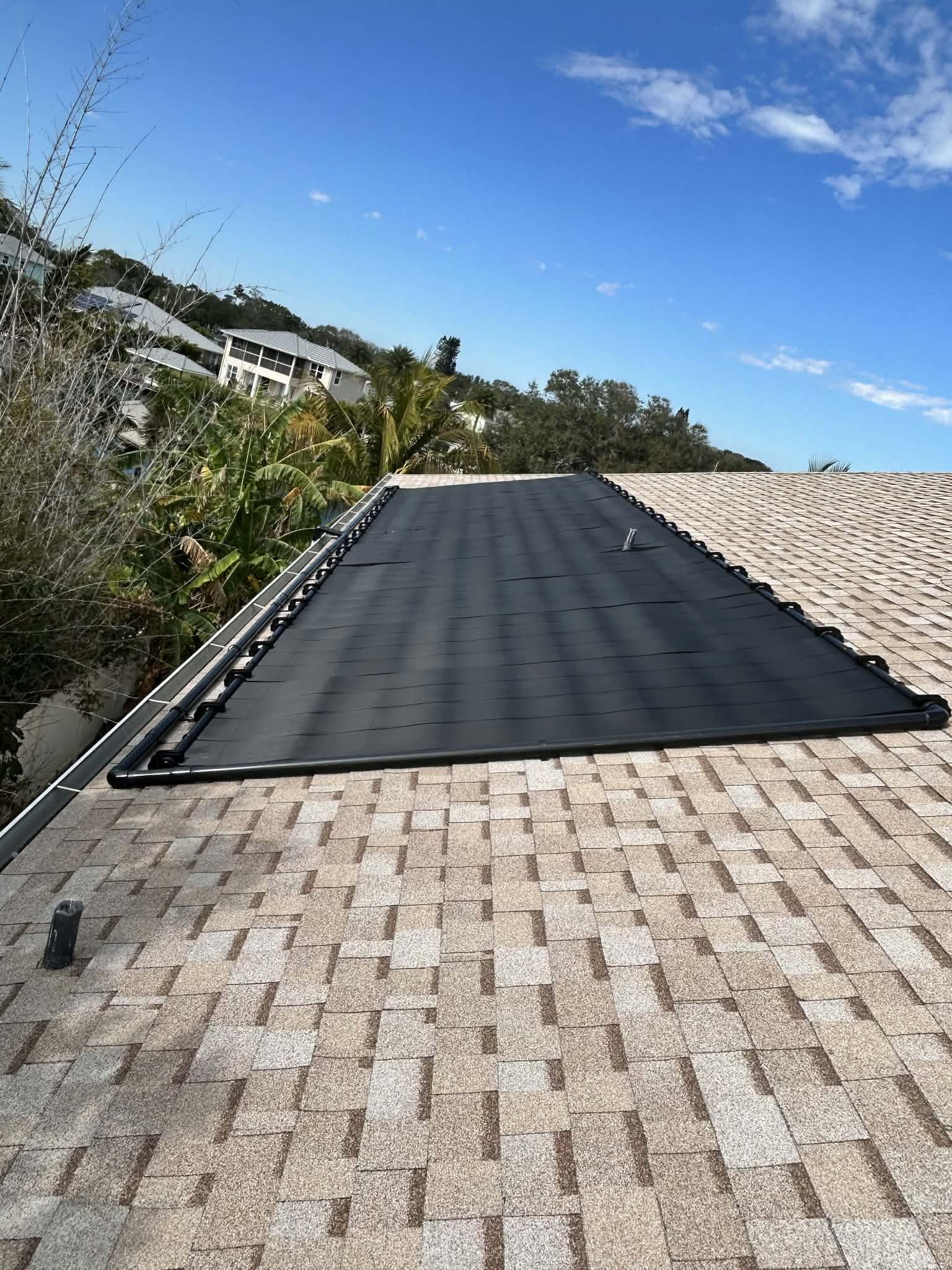
Florida Solar Pro can design, service, upgrade, and integrate Heliocol systems with existing pool equipment. A Heliocol array is not an island on the roof — it depends on the valve, actuator, controller, sensors, plumbing, and circulation equipment on the pad to actually deliver heat to the pool.
Heliocol integration covers:
- Collectors
- Plumbing
- Solar valves
- Actuators
- Controllers
- Sensors
- Equipment-pad integration
- Supplemental heat
For full Heliocol system details, warranty assistance language, and our complete service process, see our Heliocol solar pool heating service page.
SunStar Integration
A SunStar solar pool heating system is integrated the same way — tied into the valve, actuator, controls, plumbing, and circulation equipment so the collectors receive the right flow at the right time. Whether the SunStar array is already on the roof or being planned as a new system, the goal is the same: the collectors, controls, and pad equipment operate as one heating loop.
SunStar integration considers:
- Existing SunStar collectors
- New SunStar systems
- Flow
- Controls
- Valves
- Automation integration
- Supplemental heating
- Reroof planning
Learn more on our SunStar solar pool heating service page.
Adding a Gulfstream Heat Pump
A Gulfstream pool heat pump may be integrated into a Davie pool-heating setup in more than one way. It can serve as the primary powered pool heating source, as supplemental heat added to an existing solar system, or as a replacement for an older heat pump that is no longer practical to repair. The right role depends on the pool, the existing equipment, and the heating goals.
Before recommending a Gulfstream integration, we evaluate:
- Pool size
- Circulation
- Plumbing
- Electrical supply
- Equipment-pad space
- Controls
- Heating goals
We do not provide exact equipment sizing without project information, because heat-pump performance depends on conditions, sizing, and system design that have to be evaluated on site. See our Gulfstream pool heat pump installation and service page.
Solar + Gulfstream + Automation
A combined pool-heating system is where integration matters most. When solar collectors and a Gulfstream heat pump share the same pool, the controls and automation are what keep them from working against each other. The system has to decide when water is sent to the solar collectors, when the heat pump is allowed to run, and how supplemental heating fits into the overall operation.
A combined system may involve:
- Heliocol or SunStar solar collectors
- A Gulfstream heat pump
- Circulation pump
- Automatic valves
- Actuators
- Temperature sensors
- Controls or automation
System integration should determine when water is sent to the solar collectors and how supplemental heating fits into operation. We design the hybrid setup as one system — plumbing, valves, controls, and automation planned together — rather than bolting a heat pump onto an existing solar array and hoping the two cooperate. We do not promise automated operation beyond the capability of the selected equipment.
Does the Circulation Pump Matter?
Water movement is part of pool-heating performance. A heating system can only deliver heat that actually reaches the pool, and that depends on the circulation pump moving the right volume of water through the collectors or heat pump at the right rate. A pump that is undersized, aging, or programmed incorrectly can hold back an otherwise good heating system.
Circulation factors we evaluate include:
- Adequate flow to move the full pool volume through the heating equipment
- Interaction with filtration, since the filter and pump share the same water path
- Solar collector flow requirements, which differ from standard pool return flow
- Heat-pump circulation needs, since a heat pump relies on steady water movement while it runs
- Valve configuration, which determines where water is sent at any given moment
Where a variable-speed pump is present, the solar flow rate and pump programming are checked together, because solar collectors need a specific flow range to heat effectively. Not every pool needs a new pump — in many cases the existing circulation equipment supports the heating system once the flow rate and valve configuration are correct. We tell you what we actually find on the pad.
Modernizing an Older Equipment Pad
An older equipment pad can often be modernized in stages instead of replaced all at once. The right scope depends on which components are still serviceable and which are actually limiting the heating system.
Possible upgrades include:
- Valves
- Actuators
- Controls
- Sensors
- Automation
- Circulation equipment
- Plumbing
- Solar collectors
- Gulfstream heat pump
Florida Solar Pro evaluates what can remain and what actually needs upgrading. We look at the pad as a complete system — valves, actuators, controls, sensors, automation, circulation, plumbing, collectors, and heat pump — so the modernization addresses what is really holding the system back instead of replacing parts that are still doing their job.
Planning Heating Upgrades Around a Reroof
Roof replacement may require solar collector removal and reinstallation, which makes a reroof a practical time to evaluate the whole heating system while the equipment is off the roof and accessible.
A reroof may also be a good time to evaluate:
- Collector condition
- Controls
- Plumbing
- System layout
- Whether supplemental Gulfstream heating should be added
We do not guarantee that every existing collector can be reused after a reroof. Components are inspected after removal, and failed or unsuitable equipment may require separately authorized replacement. See our solar removal and reinstallation service for details.
Service for Existing Systems
Florida Solar Pro services existing pool-heating equipment in Davie, including the controls, valves, and automation that tie the system together.
- Heliocol
- SunStar
- Gulfstream
- Valves
- Actuators
- Controllers
- Sensors
- Plumbing
- Automation-related heating controls
Florida Solar Pro can service appropriate systems installed by other contractors but does not automatically assume another contractor’s workmanship or installation warranty. We evaluate the equipment on its own condition and recommend repair, upgrade, or integration based on what we actually find.
Manufacturer Warranty Assistance
Florida Solar Pro provides authorized assistance with applicable Heliocol and SunStar manufacturer/factory warranty matters within its authorized service territory.
- Manufacturer / Factory Warranty — Coverage from Heliocol or SunStar for qualifying defects in the collector or factory components, subject to the manufacturer’s warranty terms and approval.
- Installer / Workmanship Warranty — Coverage for the original installation labor and workmanship, provided by the installing contractor. This is a separate obligation from the manufacturer warranty.
Manufacturer warranty is separate from the original installer’s workmanship warranty. Warranty eligibility and approval are determined by the manufacturer’s applicable terms and are not guaranteed.
Pool Heating Service in Davie and Nearby Broward Communities
Florida Solar Pro designs, integrates, services, and modernizes pool-heating systems for pools in Davie and the neighboring Broward communities, including Cooper City, Plantation, Weston, Fort Lauderdale, Pembroke Pines, and Hollywood. Whether you are tying solar heating into existing pool automation, adding a Gulfstream heat pump, upgrading controls and valves, or coordinating a heating upgrade with a reroof, we handle the integration and service work across this part of Broward County.
For the broader Broward County picture, see our Broward County solar pool heating service page, our full solar pool heating overview, our pool heat pumps page, our pool equipment and automation services, and our solar removal and reinstallation service for reroof projects. You can also reach us through our contact page.
Other Solar Services in Broward County
Florida Solar Pro is a full-service solar contractor across Broward County. Beyond pool heating, we provide PV solar repair and inverter diagnostics, Solar Rescue for systems whose original installer has closed, battery backup and storage upgrades, and solar panel removal and reinstallation for reroofing projects. PV solar repair & Solar Rescue · battery backup & storage · solar removal & reinstallation · Solar Rescue.
Davie Pool Heating & Automation FAQ
Can pool automation control solar pool heating?
Yes. Many pool automation platforms can be set up to operate the solar valve, actuator, and controller alongside the pump and any heat pump, so the heating sources run on a coordinated schedule instead of independently. Whether your specific automation can do this depends on the platform on the pad and the controls installed with the solar system, so we evaluate the equipment before recommending an integration path.
Can automation work with a Gulfstream heat pump?
Yes. A Gulfstream pool heat pump can be integrated with compatible pool automation so its run schedule, setpoint, and coordination with solar heating are managed from one control platform. Integration depends on the automation system, the heat pump controls, and how the plumbing and valves are configured, so we confirm compatibility as part of the evaluation rather than assuming it.
What does a solar valve do?
The solar valve directs pool water either back to the pool on the normal return path or up to the rooftop solar collectors when heating is available. When the controller calls for heat, the actuator rotates the valve to send water to the collectors; when heating is not needed, it rotates back. A solar valve that sticks or is misconfigured can keep water from ever reaching the collectors.
What happens if the solar actuator fails?
If the actuator motor fails, the solar valve may stay stuck in one position. That can leave the system permanently off, so the pool never heats, or permanently on, so water runs through the collectors even when heating is not available. The collectors and plumbing may still be in good condition, so an actuator replacement can often restore an otherwise serviceable Heliocol or SunStar system without replacing the array.
Can a bad temperature sensor stop solar heating?
Yes. The controller relies on roof and water sensors to decide when to run. A failed, drifted, or miswired sensor can make the controller think the roof is cold when it is hot, or the pool is warm when it is cool, so it never calls for heat or runs at the wrong time. We test sensor resistance and placement before recommending replacement.
Does a variable-speed pool pump affect solar heating?
It can. Solar collectors need a specific flow range to heat effectively, and a variable-speed pump set too low may not move enough water through the array, while a pump set too high can push water through faster than the collectors can transfer heat. Where a variable-speed pump is present, the solar flow rate and pump programming should be checked together as part of the heating system rather than treated as separate settings.
Can Heliocol work with existing pool automation?
Yes. A Heliocol solar pool heating system can be integrated with compatible existing pool automation so the solar valve, actuator, and controller operate alongside the rest of the equipment. The integration depends on the automation platform, the solar controls, and the plumbing configuration, so we evaluate the pad before recommending how to tie them together.
Can SunStar work with automated controls?
Yes. A SunStar system can be operated through automated controls and integrated with pool automation so its valve, actuator, and controller run on a coordinated schedule. We confirm that the existing automation and the SunStar controls are compatible before recommending an integration, and we can upgrade the controls where the existing setup cannot coordinate the sources.
Can a Gulfstream heat pump be added to an existing solar system?
Yes. A Gulfstream heat pump can be added alongside a serviceable Heliocol or SunStar system so the collectors contribute during favorable conditions and the heat pump provides supplemental heating when solar alone is not enough. Correct integration depends on the plumbing, valves, controls, circulation, and electrical service, so we evaluate the whole pad before recommending a hybrid setup.
Can Florida Solar Pro modernize an older equipment pad?
Yes. We evaluate the valves, actuators, controls, sensors, automation, circulation equipment, plumbing, collectors, and any heat pump together, then recommend only what actually needs upgrading. In many cases a controls or valve upgrade improves how the existing equipment operates without requiring a complete system replacement.
Do I need to replace everything to upgrade my controls?
No. A controls upgrade can often be done while retaining serviceable collectors, plumbing, and heating equipment. We evaluate which components are still working and which are limiting the system, so the upgrade addresses what is actually holding performance back rather than replacing the entire pad by default.
Can Florida Solar Pro service a system another contractor installed?
Yes. We service appropriate Heliocol, SunStar, Gulfstream, and pool-heating systems regardless of the original installer, including valves, actuators, controllers, sensors, plumbing, and automation-related heating controls. Florida Solar Pro does not automatically assume another contractor’s workmanship or installation warranty.
Should pool-heating controls be evaluated during a reroof?
Yes. A reroof is a practical time to evaluate the controls, valves, sensors, and plumbing along with the collectors, since the system has to come off the roof anyway. Reviewing the controls while the equipment is accessible helps you decide what should go back up and whether a controls or automation upgrade makes sense before reinstallation.
Florida Solar Pro LLC, 1930 SW Biltmore St, Port St. Lucie, FL 34984. Licensed: CVC56702, CPC1458189, CAC1817178, SCC131153056.